- Thu Oct 30, 2014 10:45 am
#38494
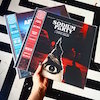
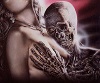
The ROUGH translation of the liner notes for the AMS lp ‘Milano odia: la polizia non può sparare’.
Giulio Sacchi must die.
Umberto Lenzi (1931) after graduating in 1956 at the Centro Sperimentale di Cinematografia with a short film inspired by Pasolini, from 1961 stars working as director, initially focusing on adventurous movie in costume and then in ‘secret agents’ and ‘comics’ movies (Kriminal, 1966). In the late 60's Lenzi manages to achieve to his beloved genres: war movies (Attentato ai tre grandi, 1967; La legione dei dannati, 1968) and ‘gialli’ with English school’s plot but more sexy (Orgasmo, 1968; Così dolce .. così perversa, 1968).
In 1973 Lenzi Milan shoots Milano rovente a 'mafia movie' in which the police remains in the background. Although also set in Milan and still focusing on the actions of a thug, Milano odia: la polizia non può sparare (1974) is instead a completely different film, a ruthless noir that rightfully belongs to the 'Italian police’ genre, representing one of the best examples.
Lenzi frees himself both from the issues of the spaghetti westerns present in many Italian police movies (in which bikes and cars replace horses and stagecoaches maintaining unchanged plot and characters) and from the famous US ‘crime movies’ of those years as The French connection, 1971; Dirty Harry, 1971 and Death wish, 1974, thanks to the Ernesto Gastaldi’s script (writer of more than a hundred movies) and especially to the masterful acting of Tomas Milian that outlines the figure of a villain destined to remain in the annals.
Giulio Sacchi, a mediocre delinquent despised by criminals because coward and unnecessarily violent, exploitative and kept man of Jone, decides to start his own business and kidnaps Marilù, the daughter of industrialist Porrino, Jone’s employer, involving in the enterprise two gregarious, succubus and dumb. The kidnapping turns into a bloodbath. The criminals, under the effects of drugs and alcohol, kill without mercy anyone who stands in their way. The night ambush to the couple in the car, Sacchi’s face distorted against the car window while he’s teasing them, the killing of the guy, Marilù escape in the woods, the broke into the villa, the gratuitous violence against the guests that are beaten, sexually abused, hanged half-naked to a chandelier, mark the spiral of violence that finds the conclusion in the final massacre. Sacchi, heard a noise upstairs, shoot blindly into a door and kill the child of the hosts. To mother’s desperate cries, Sacchi hesitates for a moment (only a very short time when he proves to be 'almost human' as the export title of the film) and then reacts with a hail of gunfire that kills all the unfortunate and places an end to the nightmare. These sequences, really harsh, are a blow to the stomach of the audience, but were also tough for the film crew with a frantic Lenzi shouting and urging the actors to be more cruel and a pilled-up and drunk Milian (more that he used to be at that time ) to full identify himself in Giulio Sacchi.
Sacchi whose only 'value' is to get rich and get away with it, not wanting to leave possible witnesses mercilessly kills his girlfriend, the kidnapped and the accomplices and he even would be able to get away with it without the final intervention of the Commissioner Grandi that kills him in the garbage, in a symbolic sequence.
Lenzi is highly professional in both the action sequences and actor directing. Tomas Milian, a Cuban actor living in Italy from 1959, after the initial hesitation to accept such a negative role, throws himself body and soul and literally gives life to Giulio Sacchi, embodying the different facets of the character: recriminations towards society that hide only his desire for an easy life, indifference towards neighbor and absolute self-centeredness, explosion of extreme violence, the creeping cowardice that led him to kill as the 'simplest' solution and that finds a striking demonstration when he tries to justify himself whimpering while being beaten by former bandmates and especially in the final sequence when he begs Grandi for mercy. Henry Silva, outlines a sore Commissioner Walter Grandi struggling with extreme violence and a judicial system that protects the perpetrators more than the victims. Grandi immediately realizes that the kidnapping will end up in the blood but he cannot prevent the tragic outcome and, wounded in the body and in his sense of justice seeing Sacchi exculpate and with the ransom, does not hesitate to resign and to put an end to what the law has not been able to do. A very unusual role for the actor (and in fact the first choice was Richard Conte, who died shortly before filming began), whose angular face, static and hard-eyed, usually is used to personify bad characters. The cast is completed by Ray Lovelock (Carmine), the more human member of the gang, Gino Santercole (Vittorio), the other criminal, caught in a 'hit' too big for him while the female roles are assigned to Laura Belli (Marilù), an actress mostly working for television and Anita Strindberg (Jone).
Producer Luciano Martino (Lo strano vizio della signora Wardh, 1971, Tony Arzenta, 1973) who produced the year before the similar titled Milano trema: la polizia vuole giustizia directed by his brother Sergio, chooses Ennio Morricone for the composition of the score, a circumstance that demonstrates the film's adequate budget. Morricone, certainly not an iconic musician of the Italian police movies (as Stelvio Cipriani, Franco Micalizzi and the De Angelis brothers) and even less of the 'poliziotteschi', the more exploitative drift of the genre, at the time had already scored a bunch of 'crime movies' (Il clan dei siciliani, 1969; Roma come Chicago, 1969; Città violenta, 1970; Revolver, 1973) and for the music of 'Milano odia’ draws on these experiences.
The Maestro while focusing the score on piano, trumpet and the drums’ rhythmic power also uses a an orchestra (with strings, brass and woodwinds sections) but only for coloring the atmosphere, relying as usual on Bruno Nicolai as conductor.
Rapimento brings together in a single suite of 15 minutes the main theme of the film that comments upon the criminal actions, a theme that loop back during the track, interspersed with tensive interventions and a rhythmic part performed by two counterpointed pianos and by dissonant strings. The track starts with a few piano notes and a base of brass and strings (used for the punitive beating of Sacchi), then the main theme is exposed, well marked by the piano with the rhythm often beat in the foreground by the bass drum only (so for example during the opening credits). The composition recalls 'Revolver' in the construction of the theme and ‘Indagine’ in the rhythm of the harmonic intervals.
Raptus omicida reinterprets the main theme of 'Rapimento' smoothly played by the saxophone (an instrument quite unusual for Morricone) and then by a trumpet to the drums and the bass guitar ‘pop’ (almost in the 'progressive' meaning given in Italy during the early '70s to this word) rhythmic. Morricone instead of arranging 'easily' the theme in a dramatic sense, counterpoints it with another theme, also present in 'Rapimento', used in a disturbing way to confuse the melodic part making this piece more difficult. The theme is repeatedly played and at the end is marked in unison by the brass and woodwinds sections. The song, despite the title (‘murderous rampage’), takes the side of the victims and not that of the criminals and in the movie is used for the sequence in which are found their bodies (and for the closing credits).
I conti ora tornano is linked to the previous theme but with a more melancholic arrangement and is performed by an oboe with a slightly accompaniment of acoustic guitars and strings. The song is used in the film only in a pair of sequences and is related to the presence of Marilù but is intended by Morricone as an ode to the memory of the victims.
The score for Milano odia: la polizia non può sparare recorded at the Ortophonic Studios by Sergio Marcotulli was not published in 1974, although RCA prepared a master with ‘Rapimento’, ‘Raptus omicida’ and ‘I conti ora tornano’ for a LP. Only ‘Milano odia, la polizia non può sparare - titoli’, a short version of 'Rapimento', was included in the compilation ‘I film della violenza’ published in 1975. The three tracks are instead released by RCA on CD in 1994 (along with the score of Il giustiziere) while Digitmovies in 2007 released a CD that also contains 9 film versions not significantly different from the already known songs.
Fabio Capuzzo